
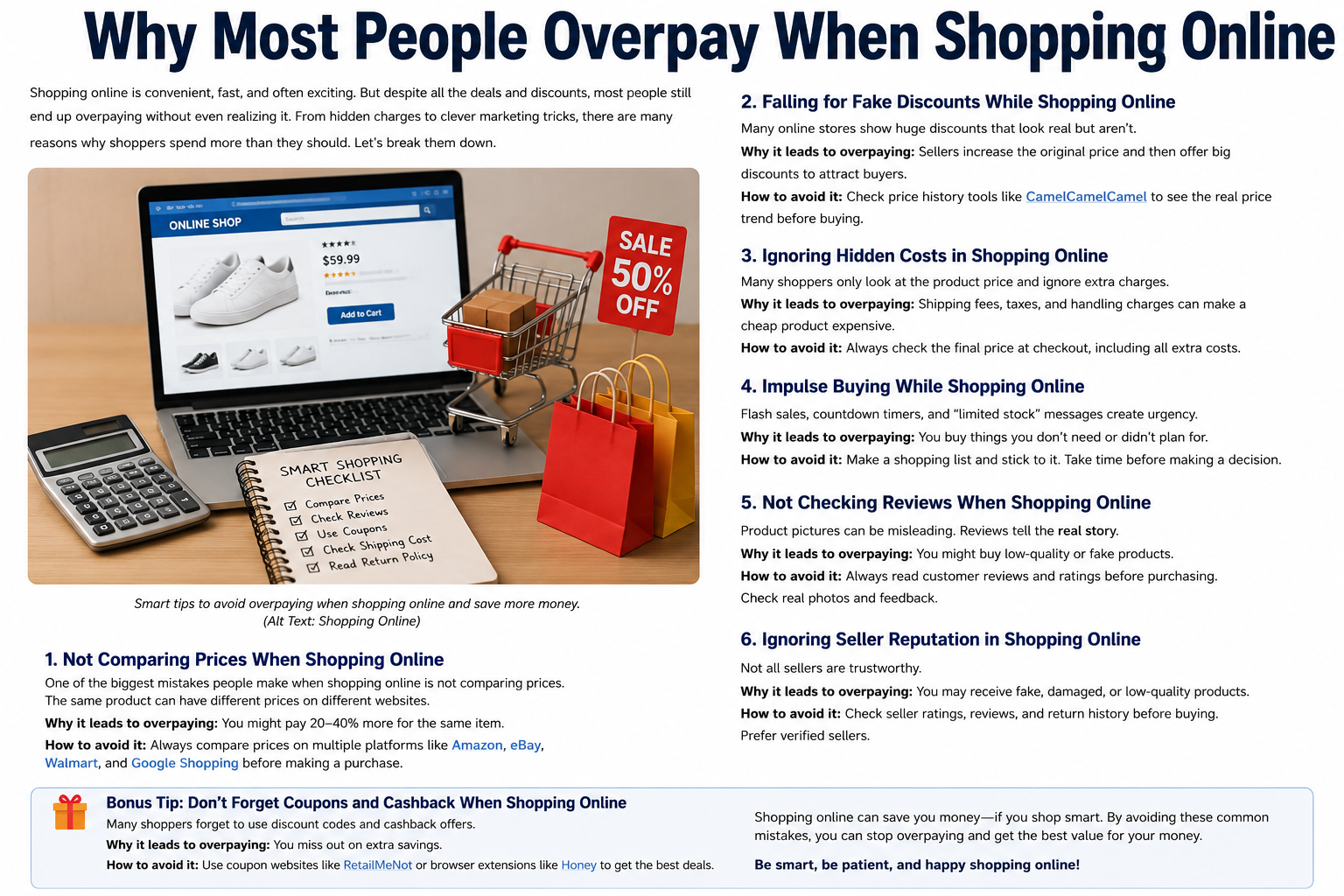
Why Most People Overpay When Shopping Online
Online shopping has become part of everyday life. It is fast, easy, and available 24/7. You can buy almost anything with just a few clicks. But despite all these benefits, one big problem remains—most people overpay when shopping online.
The truth is, many shoppers think they are getting the best deal, but they often end up spending more than necessary. This happens due to small mistakes, smart marketing tricks, and lack of awareness.
In this article, we will explore why people overpay online and how you can avoid it.
1. Shopping Online Without Comparing Prices
One of the biggest mistakes when shopping online is not comparing prices.
Different websites offer different prices for the same product.
Why it causes overpaying:
When shopping online, you may pay 10–40% more if you don’t compare.
2. Shopping Online and Ignoring Product Reviews
Many users ignore reviews while shopping online.
Why it causes overpaying:
You may buy low-quality or fake products.
Example:
A product listed for $50 on one site may be $35 on another.
How to avoid it:
Always compare prices on multiple websites before buying. Use trusted platforms like: Amazon
2. Falling for Fake Discounts
Online stores often use big discount banners like “70% OFF” or “Limited Time Offer.” These create urgency and push people to buy quickly.
But not all discounts are real.
Why this leads to overpaying:
Some sellers increase the original price before applying a discount, making the offer look better than it actually is.
How to avoid it:
Check price history tools and compare across stores before trusting discounts.
3. Fake Discounts While Shopping Online
Discount banners often mislead shoppers.
4. Hidden Costs in Shopping Online
Shipping and tax are often ignored.
Why it causes overpaying:
Final price becomes higher than expected.
Why it causes overpaying:
Prices are sometimes inflated before discounts.
Hidden costs include:
- Shipping fees
- Taxes
- Handling charges
- International fees
Why this leads to overpaying:
A cheap product can become expensive after checkout.
Example:
A $20 item may cost $30 after shipping and taxes.
How to avoid it:
Always check the final checkout price before confirming your order.
4. Impulse Buying Due to Marketing Tricks
Online shopping websites are designed to make you spend more money.
They use:
- Countdown timers
- “Only 2 left” messages
- Flash sales
- Personalized ads
Why this leads to overpaying:
You buy things quickly without thinking or comparing.
How to avoid it:
Make a shopping list and stick to it. Avoid emotional buying.
5. Not Checking Product Reviews Properly
Product images can be misleading. A product may look perfect but perform poorly in real life.
Why this leads to overpaying:
You may pay full price for a low-quality item.
How to avoid it:
Always read:
- Star ratings
- Verified reviews
- Real customer photos
Trusted review sites:
6. Ignoring Seller Reputation
Not all online sellers are trustworthy. Some sell fake or low-quality products.
Why this leads to overpaying:
You might receive a product worth much less than what you paid.
How to avoid it:
Check:
- Seller ratings
- Customer feedback
- Return history
Always prefer verified sellers.
7. Forgetting Coupons and Cashback Offers
Many shoppers miss out on savings because they forget to apply discount codes.
Why this leads to overpaying:
You pay full price even when discounts are available.
How to avoid it:
Before checkout, check:
- Coupon websites
- Cashback apps
- Browser extensions like Honey: https://www.joinhoney.com
8. Buying Without a Plan
Many people shop online without planning. This leads to unnecessary purchases.
Why this leads to overpaying:
You buy items you don’t need, increasing total spending.
How to avoid it:
Always:
- Create a shopping list
- Set a budget
- Stick to your needs
9. Trusting Ads Too Much
Advertisements are designed to attract attention, not always to inform truthfully.
Why this leads to overpaying:
Ads may exaggerate product benefits or hide weaknesses.
How to avoid it:
Always research before buying. Don’t rely only on ads.
10. Not Understanding Return Policies
Some shoppers ignore return policies when buying.
Why this leads to overpaying:
If the product is wrong or damaged, you may lose money because returns are difficult.
How to avoid it:
Always read:
- Return policy
- Refund policy
- Exchange rules
Most people overpay when shopping online because of simple but costly mistakes. They rush into buying, trust discounts too easily, ignore hidden costs, and fail to compare prices.
The good news is that you can easily avoid these problems. With a little patience and awareness, you can become a smarter shopper and save a lot of money.




Very interesting perspective, thanks for compiling this data.
Gerçekten çok faydalı ve bilgilendirici bir içerik olmuş, emeğinize sağlık.
All the best
Enjoy every single day
bu konuda bu kadar net bilgiler internette malesef yok bu yüzden çok iyi ve başarılı olmuş teşekkürler.
I just like the helpful information you provide in your articles
This is really interesting, You’re a very skilled blogger. I’ve joined your feed and look forward to seeking more of your magnificent post. Also, I’ve shared your site in my social networks!
For the reason that the admin of this site is working, no uncertainty very quickly it will be renowned, due to its quality contents.
Nice post. I learn something totally new and challenging on websites
I am truly thankful to the owner of this web site who has shared this fantastic piece of writing at at this place.
Very well presented. Every quote was awesome and thanks for sharing the content. Keep sharing and keep motivating others.
I am not sure where youre getting your info but good topic I needs to spend some time learning much more or understanding more Thanks for magnificent info I was looking for this information for my mission
I really appreciated several useful ideas to consider when I needed it most and I look forward to reading more from you
This article gave me a clear perspective on the topic during my research and I look forward to reading more from you
What i do not realize is in fact how you are no longer actually much more wellfavored than you might be right now Youre very intelligent You recognize thus considerably in relation to this topic made me in my view believe it from numerous numerous angles Its like men and women are not fascinated until it is one thing to do with Lady gaga Your own stuffs excellent All the time handle it up
I found a clear perspective on the topic when I needed it most and I look forward to reading more from you
I truly appreciate your technique of writing a blog. I added it to my bookmark site list and will